If you would like further information about our trailers or would like to request a quote or book a demo, please get in touch and one of our sales representatives will respond as soon as possible.
By Xana Castle | Published on July 7, 2026 | 3 min read
Home > News > Why Stored Energy in Coiled Pipe Is Still a Safety Challenge
Coiled HDPE pipe has changed the way utility and infrastructure projects are delivered. It reduces joints, excavation, and installation time. However, these benefits come with a hidden risk that continues to concern safety managers and on-site crews because of the stored energy in the pipe.
Even with better equipment and training, accidents still happen. That’s why understanding the risks and how to control them is critical for anyone working with coiled pipe.
Think of it like a giant spring. When HDPE pipe is wound into coils, it naturally wants to snap back straight. That tension is stored energy.
The larger the pipe, the more energy it can hold. And when it’s released suddenly, for example, if the pipe “whips” during deployment, it can cause serious injuries. Crews aren’t just handling heavy pipe; they’re also managing powerful forces that can move unpredictably.
This isn’t a new issue, but it remains one of the biggest safety concerns in pipe installation.
Across the industry, incidents have ranged from cuts and bruises to broken bones and even near-fatal accidents. For companies that pride themselves on high safety standards, ignoring this risk simply isn’t an option.
While projects are under pressure to move faster, safety can’t be sacrificed for speed.
Some contractors have tried to tackle the problem with extra training, stricter supervision, or by avoiding coiled pipe altogether and using straight lengths.
However, that trade-off comes with its own headaches:
Contractors are left with a tough choice, balancing efficiency against safety.
The answer isn’t to abandon coiled pipe, but to manage its risks better.
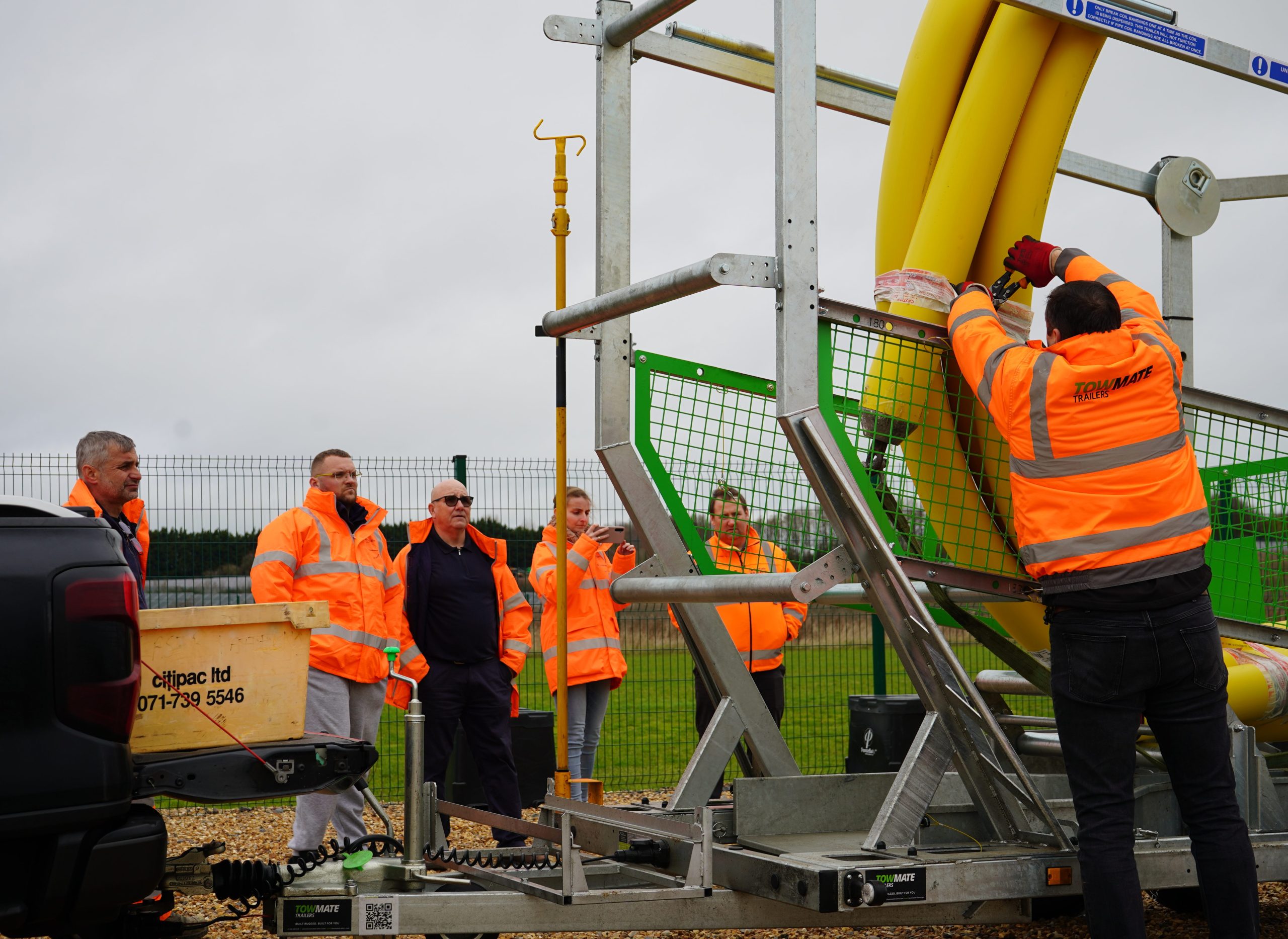
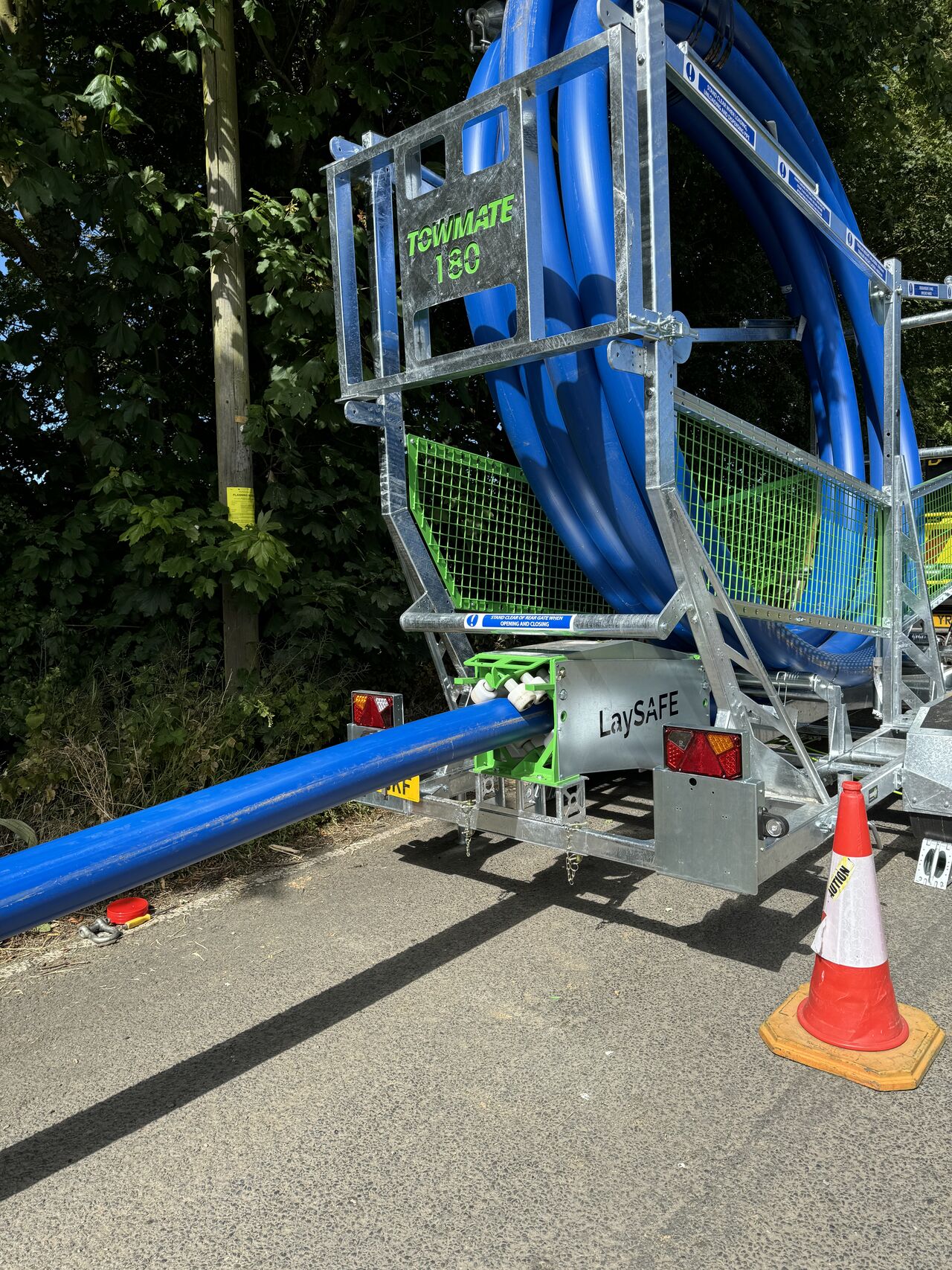
Modern trailers and deployment systems, like those developed by Towmate, are designed with safety front and centre. Instead of relying only on operator skill, these systems control the stored energy as the pipe is released. They stabilise the pipe, reduce sudden movements, and make the whole process safer.
That means crews stay protected, while contractors still enjoy the productivity gains of coiled pipe.
There’s a misconception that safety slows things down. In reality, safer processes are usually more controlled, consistent, and easier to manage.
The benefits stack up quickly:
In many cases, investing in safer installation methods actually saves money and boosts performance.
The utilities and infrastructure sectors are evolving fast, with equal focus on productivity and workforce safety.
Stored energy in coiled pipe is a real challenge, but it doesn’t have to be an unavoidable risk. By recognising the danger, adopting safer deployment systems, and embedding risk management into everyday practice, contractors can protect their teams while keeping projects efficient.
The goal is simple: faster, smarter installations without compromising the safety of the people doing the work.