EXCELLENT | 5.0 out of 5


EXCELLENT | 5.0 out of 5
If you would like further information about our trailers or would like to request a quote or book a demo, please get in touch and one of our sales representatives will respond as soon as possible.
By Xana Castle | Published on July 28, 2026 | 6 min read
Home > News > Trailer Overloading: Why “It Fits” Doesn’t Mean “It’s Safe”
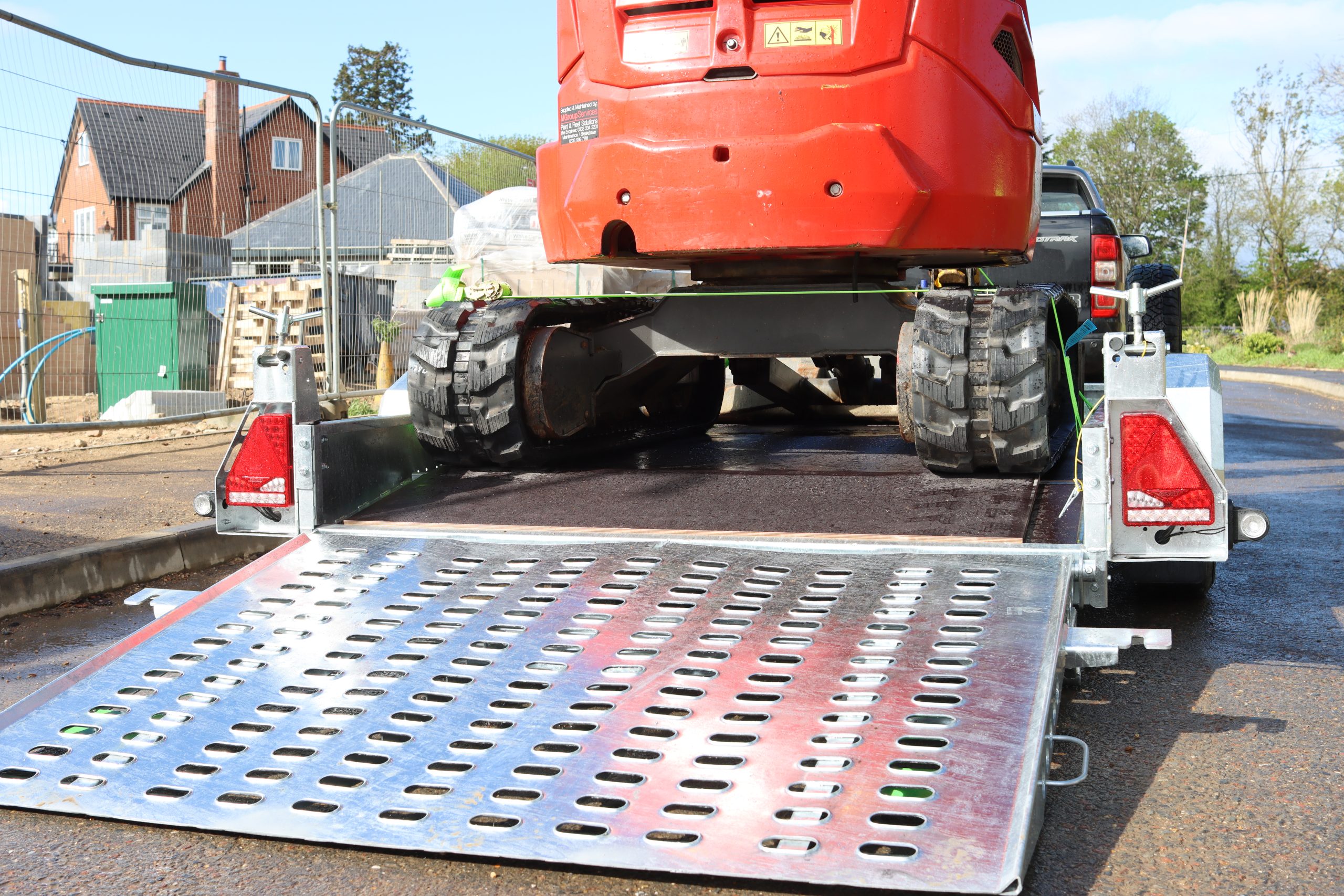
It’s easy to look at a trailer with plenty of empty space and assume everything is fine. However, when it comes to towing, space isn’t the problem, weight is.
For fleet managers, plant operators and drivers, judging a load by eye alone can lead to serious safety and compliance risks. Overloading or poor weight distribution can affect braking, steering and stability, putting the driver, the business and other road users at risk.
Understanding payload, load position and the towing vehicle’s limits should therefore be supported by clear procedures, accurate information and suitable staff training.
Every trailer has a maximum authorised mass, or MAM, the most it is legally allowed to weigh when fully loaded.
However, you cannot use the full MAM for the load. You must subtract the trailer’s own weight first:
MAM minus unladen trailer weight = available payload
So, if a trailer has a MAM of 3,500kg and weighs 850kg empty, the available payload is 2,650kg. Add toolboxes, ramps or accessories and that figure drops further.
Check the trailer’s identification plate and the towing vehicle’s plate or handbook. Do not exceed any stated maximum gross, train, axle, coupling or towing limits.
One of the biggest misconceptions is that overloading only happens when a trailer looks full. In reality, volume can be deceptive.
Materials such as sand, bricks, blocks and asphalt can be much heavier than they appear, particularly when carried loose. A trailer may look only partly loaded while already approaching or exceeding its permitted payload.
The same applies to compact machinery, generators, cable drums and specialist equipment. They may fit comfortably on the deck, but their weight can still exceed the trailer’s capacity.
Operators need to know:
Where materials are loaded by volume, staff should be given clear weight information or defined loading limits. Visual estimates are not enough.
The actual laden weight of the towing vehicle and trailer must remain within the towing vehicle’s permitted gross train weight. The actual weight imposed on each axle must also remain within its plated limit.
A trailer might be physically large enough, but that does not mean it is the right one for the job.
The correct trailer must have enough payload capacity for everything being carried, including machines, attachments, buckets, tools, fuel, pipework or materials.
The requirement should be understood before the trailer is selected. What is being moved? What does it weigh? How should it be positioned? Is the towing vehicle suitable?
Never rely on guesswork or previous experience alone. Loads vary, and everything adds up. When there is uncertainty, use a weighbridge or suitable weighing equipment.
Towmate’s approach is built around understanding the requirement upfront and helping operators select a trailer suited to the load, operating environment and towing application.
Even if the overall weight is legal, an individual axle can still be overloaded.
Load position affects how weight transfers between:
Positioning a machine too far forwards may exceed the permitted nose weight, coupling limit or rear-axle load of the towing vehicle. Positioning it too far back may leave insufficient nose weight and reduce stability.
Correct positioning is not always obvious, especially where different machines, attachments or materials are carried. Staff need clear instructions showing where loads should be placed and how they should be secured.
For frequently transported equipment, documented loading plans can help identify the correct trailer, loading position, securing method and checks required before departure.
Providing the right trailer is only part of the solution. The people selecting, loading and towing it must understand how to use it correctly.
Training and loading information should cover:
Clear training reduces reliance on memory and individual judgement. It also helps protect the driver, whose licence and employment could be affected if they knowingly take an unsafe or illegal combination onto the road.
The possible employment consequences will depend on the circumstances and the employer’s procedures, but drivers remain responsible for ensuring the vehicle and trailer they use are safe and legal.
During roadside checks, DVSA officers can weigh the vehicle and trailer, including individual axles.
Where an overload results in enforcement action, the driver may receive an immediate prohibition notice and the vehicle may be immobilised. The load may need to be removed or redistributed before the journey can continue.
DVSA’s fixed penalties for excess weight are:
DVSA guidance provides a 5% enforcement tolerance before a fixed penalty or prohibition is issued, unless the relevant permitted weight has been exceeded by one tonne or more. This is an enforcement tolerance, not extra legal payload. Serious cases can be taken to court.
Yes. Overloading can affect an operator’s compliance record.
An operator’s licence may be restricted, suspended or revoked where the operator fails to comply with its legal obligations, receives prohibition notices or is convicted of relevant offences.
A single incident does not automatically mean that an operator’s licence will be revoked. However, serious incidents or repeated compliance failures may lead to investigation and regulatory action.
Overloading can often be prevented by understanding the need upfront, selecting the right trailer and ensuring that staff receive the correct training and information.
Check the plated limits. Know the actual weight of everything being carried. Position and secure the load correctly. Never assume that a load is legal simply because it fits or the trailer does not look full.
Selecting the right trailer protects drivers, other road users and the business. Towmate Trailers supports utilities, infrastructure and plant operators with solutions built around safe, compliant and efficient towing.